International guidelines for purity
- Author: Christiane Fath
The purpose of the German Drinking Water Ordinance is “to protect health by guaranteeing the drinkability and purity of water for human consumption.” As a leading manufacturer of sanitary ware, GROHE is making an active contribution to reducing all chemical substances in plumbing products that could contaminate the domestic water supply. The aim is for these to be significantly below the permissible limits.
We have long been familiar with the hazards of pollution of the water supply from the materials used in pipes and fittings. This mainly arose from exposure to lead. Although Roman architect Vitruvius had already pointed out its harmful effects two thousand years ago, the heavy metal continued to be used for pipes up until the 1970s.

In-house furnaces give GROHE 100% control over the quality of its alloys.
Today lead can only be used as a component of alloys within the limits specified by the Federal Environment Agency. In the new GROHE Light alloy the lead content has been reduced by 35% (and remains about 40% below the maximum stipulated in the German Industrial Standard of 1982). In order to achieve the best for the health of its customers, at the beginning of 2015 GROHE converted its entire production to GROHE Light and adapted its processes accordingly.
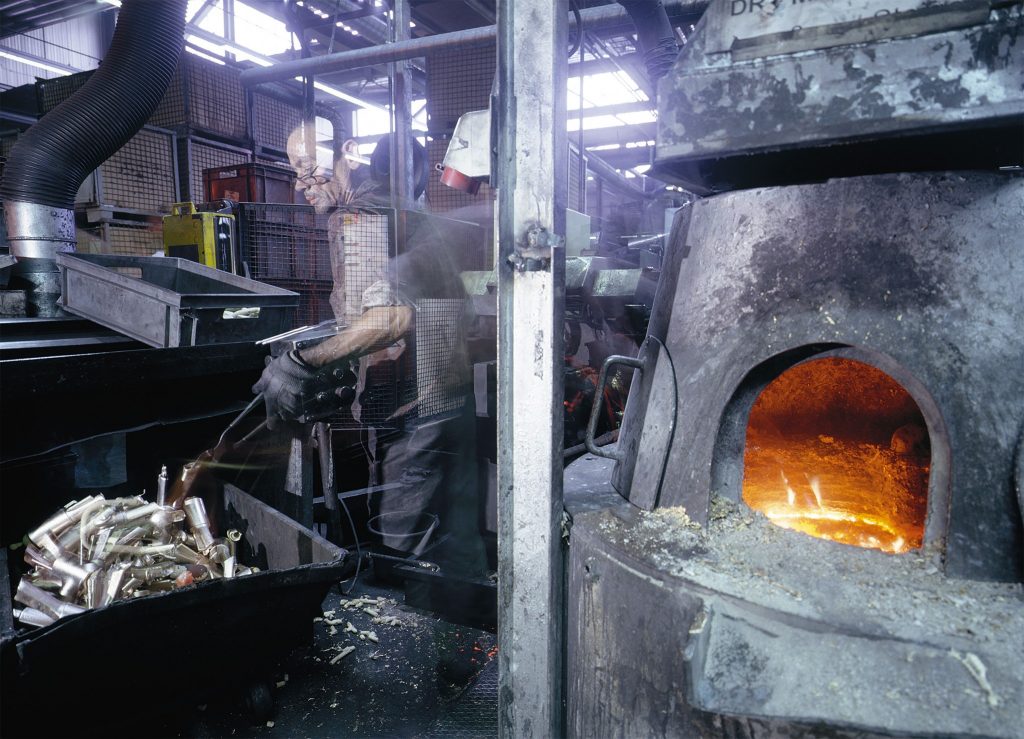
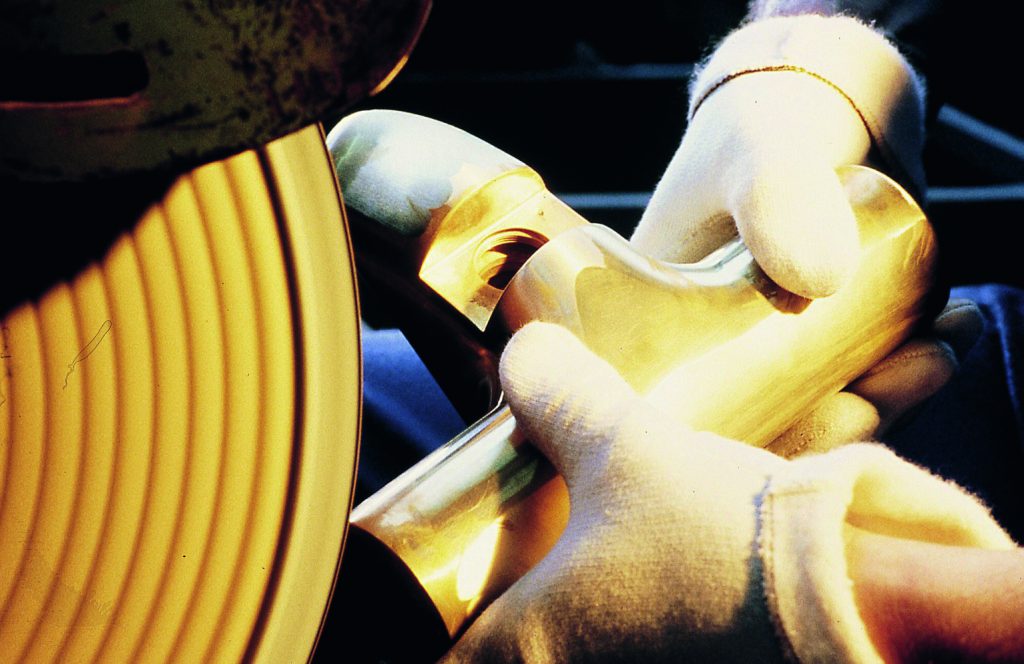
Besides mechanical production, individual work stages are still performed manually to guarantee the expected quality.
In ensuring the safety of the materials to be processed, however, GROHE does more than merely accept a certificate. By operating its own furnaces, GROHE has taken full control of the composition of its alloys and can guarantee consumers the quality they expect. The foundry at the Hemer works processesa total of 5,000 tonnes of brass per year, of which GROHE, pursuing a holistic approach to preserving the environment, manufactures up to 80% from recycled material. Despite already significantly undercutting the current limits, the manufacturer has gone a step further with the combination of the above-mentioned GROHE Light brass alloy and GROHE Zero® technology. Under the name GROHE Zero®, GROHE offers technologies that more than fulfil the international guidelines for contact between metallic materials and drinking water. GROHE Zero® technology prevent fittings from releasing lead into the drinking water. Due to a separate inner plastic water conduit, the pipe itself no longer comes into
contact with the water. As a logical consequence, fittings thus equipped are used in the GROHE Blue® drinking water system, so that there is no contact between the water and the leadbased metal.
GROHE recycles a major part of its casting material and thus stands for environmental sustainability.
The GROHE Blue® series, featured in detail in our previous issue, supplies filtered water in the home or office that has been cooled to the optimum drinking temperature in a choice of still, medium and sparkling directly from the faucet. CO2 consumption has been reduced by more than 60% compared to bottled water. The recognition of the “right of access to clean water” as a human right by the General Assembly of the United Nations in 2010 was aimed at developing the infrastructure worldwide to provide people with clean drinking water.
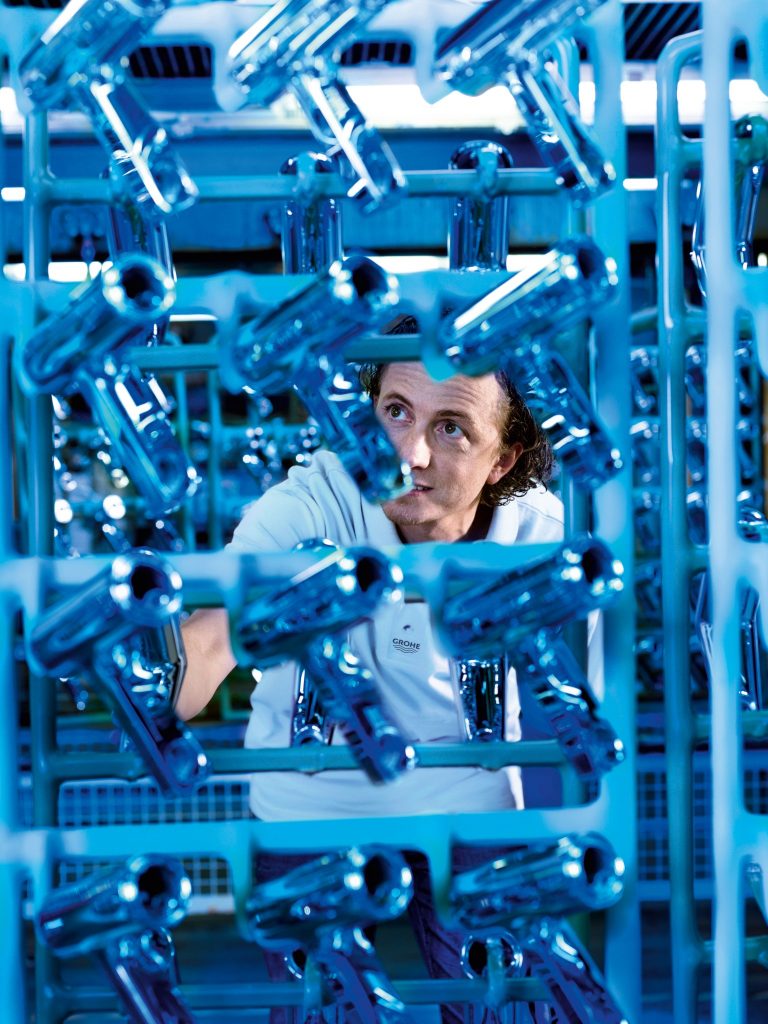
A GROHE employee checks the surface finish of fittings following galvanization.
Whilst the fundamental issue of hygiene in developing countries must be addressed, in regions with an advanced living standard it must be ensured that water is free of harmful material traces. With test series and careful quality management by independent test and certification bodies, GROHE ensures on an ongoing basis that the legal right to pure drinking water exceeds requirements in all its products. In doing so, GROHE underscores its leadership in this important segment providing day to day convenience.